Online Reporter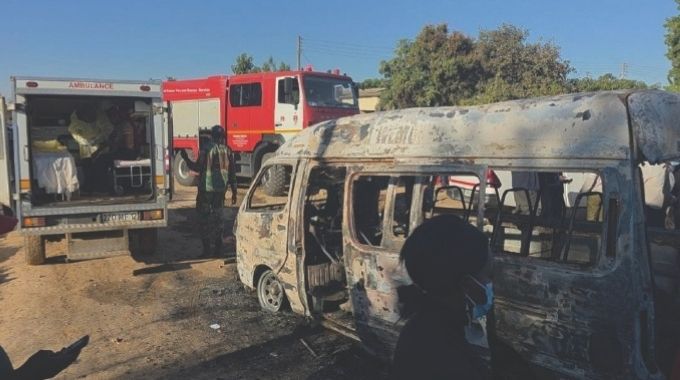
The death of seven schoolchildren in a recent road accident in Gweru should have been a national turning point — a moment of collective reckoning that forced parents, authorities, and transport operators to confront the dangerous system we have normalised.
Instead, barely weeks later, the same battered, overloaded, unregistered kombis continue to snake through Harare’s suburbs every morning, collecting children as though nothing happened.
Our society seems to have a tragic habit of moving on too quickly, even from preventable loss. But when it comes to children’s safety, complacency is unforgivable.
The continued use of unsafe, unroadworthy vehicles to ferry schoolchildren is not just a transport problem. It is a moral failure, a governance failure, and a societal failure. The fatal accident that claimed seven young lives was not an isolated tragedy — it was the predictable outcome of a system built on shortcuts, desperation, and neglect.
Every parent knows the morning scene: kombis with cracked windscreens, bald tyres, and missing seatbelts racing through neighbourhoods, hooting impatiently as children squeeze inside.
Some sit on each other’s laps. Others crouch in footwells. Doors barely close. This is not transportation — it is a daily gamble with children’s lives.
The fatal accident should have shattered the illusion that “it won’t happen to my child.” Yet the continued use of unsafe kombis each morning show how deeply entrenched this dangerous practice has become.
Some of the reasons parents keep choosing unsafe transport are that the cost of official school transport is too high for private schools, convenience of door‑to‑door pickup offered by illegal operators and economic pressure, which forces them to prioritise affordability over safety.
However, affordability cannot justify endangerment. A cheap ride that risks a child’s life is no bargain. Parents must confront the uncomfortable truth: choosing unsafe transport is not a harmless compromise — it is a calculated risk with potentially irreversible consequences.
In the wake of the Gweru disaster, enforcement on the roads should not have fizzled out as operators returned to the roads as if nothing had happened.
It is probably high time that authorities establish a national registry of approved school transport operators so that only vetted, roadworthy vehicles with licensed drivers are allowed to carry children. There should be strict penalties for illegal operators given that fines alone have proven to be not enough. As we move forward, repeat offenders should lose licences, vehicles, and operating rights.
Safety begins with collective responsibility. When parents unite, unsafe operators lose their market.
Harare cannot continue outsourcing children’s safety to luck. Authorities must enforce the law. Schools must take responsibility. Parents must make safer choices. And as a society, we must refuse to normalise danger simply because it is familiar.
The next accident is not a possibility — it is an inevitability unless we act.